

If you have ever stared at your IB subject selection sheet and felt weirdly judged by a dropdown menu, you are not alone. Language choices can feel personal. They touch confidence, identity, and that quiet fear of being “behind.” In the IB Diploma Programme, the Language B vs ab initio decision is less about pride and more about fit: the right course makes progress feel steady; the wrong one makes every task feel like running in sand.
This guide is for IB students preparing for exams who want a clear, honest way to choose. We will compare Language B and ab initio, show what each expects, and give you a simple decision checklist you can trust.
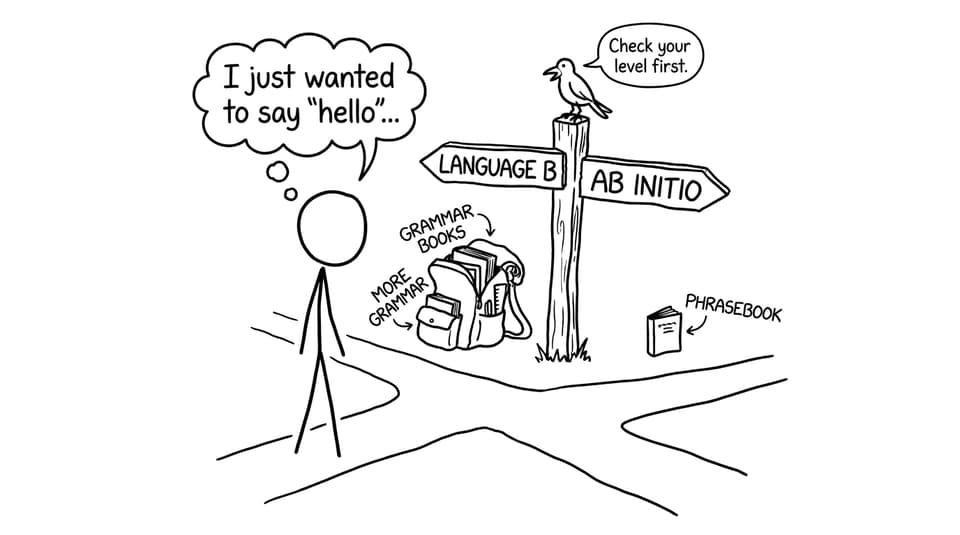
Quick checklist: Language B or ab initio?
Use this quick IB checklist before you commit:
-
You are a true beginner (or close to it) in the language: lean ab initio.
-
You studied the language for a few years already and can handle basic conversation and short texts: lean Language B.
-
You want HL as an option: it must be Language B (ab initio is SL only).
-
You want the easiest route: stop and rethink. In the IB, the “easiest” course is usually the one aligned to your actual level.
If you want a deeper breakdown of the beginner route, start with What is Ab Initio in the IB Program?.
What IB Language B is really designed to do
IB Language B is for students who already have a foundation. Not fluent, not perfect, but not starting from zero. Think of it as moving from “I can survive” to “I can express ideas clearly and accurately.”
In practice, IB Language B expects you to:
-
communicate with more control (register, tone, audience)
-
handle longer reading and listening extracts
-
write in exam text types with structure
-
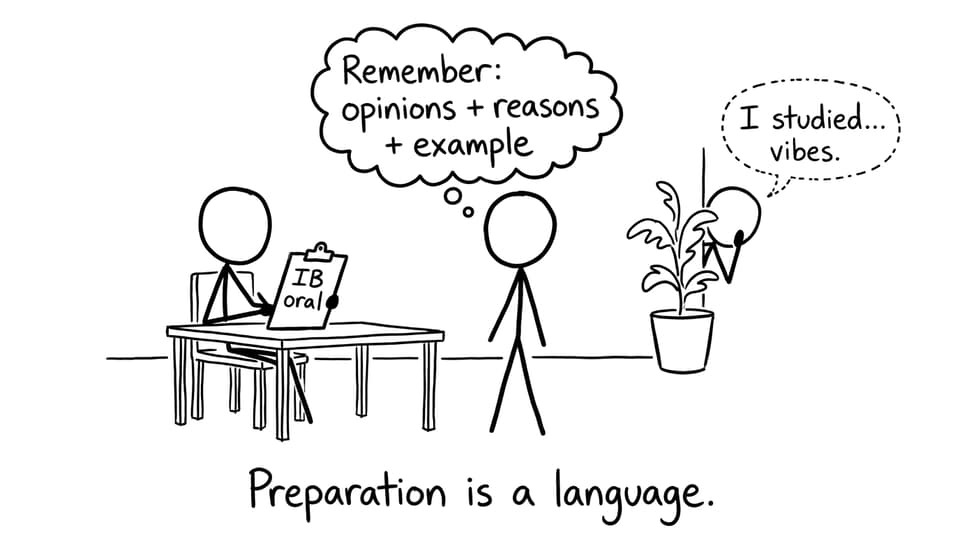
speak with reasons and examples, not just sentences
It is offered at SL and HL, and HL pushes further with more demanding skills. If you want a course-level guide, read What You Need to Know About the Language B IB Syllabus.
For targeted practice, RevisionDojo’s subject hubs can help you train like it is an IB paper, not a random worksheet. For example: IB English B Resources and IB Spanish B Resources.
What IB ab initio is really designed to do
IB ab initio is “from the beginning,” and it is built for students who genuinely have little to no prior experience. It is Standard Level only, and that matters because the pacing is designed to build confidence through practical communication.
IB ab initio focuses on:
-
core grammar and high-frequency vocabulary
-
everyday communication (plans, routines, opinions)
-
theme-based language you can reuse across tasks
-
accuracy that grows through repetition, not perfection
If you are choosing ab initio, it helps to understand how the course is assessed and what the weekly rhythm should look like. Use IB Language ab initio Coursework: Structure, Marks & Tips and Top Strategies for Learning an Ab Initio Language in IB.
IB themes: the hidden bridge between both courses
One calming truth in the IB is that both Language B and ab initio revolve around the same five themes: identities, experiences, human ingenuity, social organization, and sharing the planet. The difference is not what you talk about. The difference is how deeply you can talk about it.
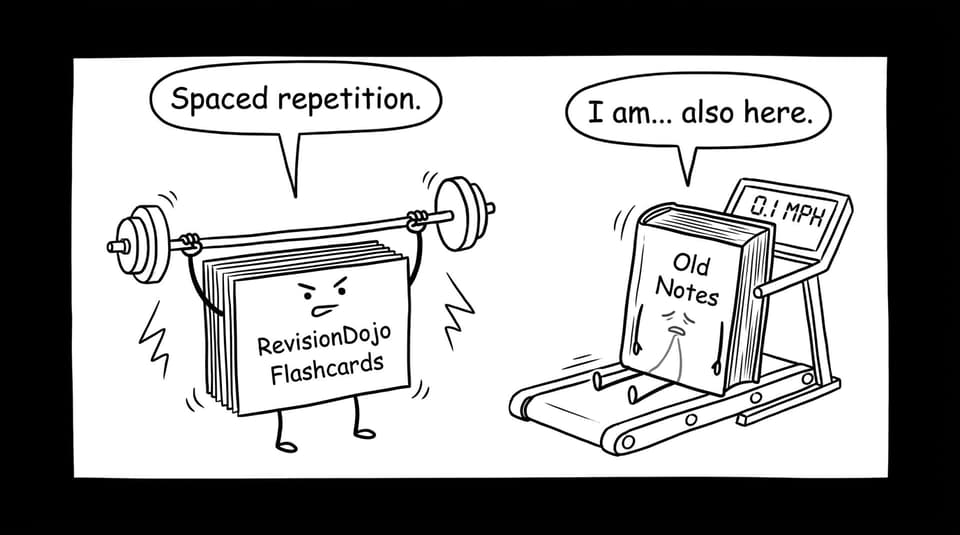
That means your smartest revision strategy is to build reusable language by theme. On RevisionDojo, students often use Study Notes to understand the theme vocabulary, then Flashcards to keep it alive, and then the Questionbank to apply it in exam-style tasks.
To make your revision system more efficient across your whole IB workload (not just languages), you can explore:
How to choose based on your current level (not your hope)
Here is a simple IB self-check that usually works.
Choose IB ab initio if...
-
you struggle to form basic sentences without translating word-by-word
-
you cannot follow slow, simple audio without subtitles
-
you have not studied the language in school for multiple years
-
you need a course that builds fundamentals carefully
Choose IB Language B if...
-
you can handle familiar conversation topics with some confidence
-
you can read short articles and get the main idea
-
you have studied the language before (often 2--5 years)
-
you want SL or HL flexibility
If you are already in Language B and your writing feels “almost right but never quite,” use How to Avoid Common Mistakes in Language B Writing and How to Improve Your Language B Speaking Skills.
A practical IB revision plan for whichever you pick
The students who improve fastest do not rely on motivation. They rely on a loop.
-
Learn: Use RevisionDojo Study Notes to clarify grammar and theme vocabulary.
-
Remember: Do 7--10 minutes daily with Flashcards.
-
Apply: Use the Questionbank for reading, writing, and skill practice.
-
Get feedback: Use AI Chat for quick explanations and Grading tools to see how marks are won and lost.
-
Simulate: Use Mock Exams and Predicted Papers to train timing and stamina.
When coursework pressure spills into language study (it always does in the IB), the Coursework Library and Tutors help you keep momentum without guessing what “good” looks like.
Closing: the right IB course makes consistency possible
Choosing between IB Language B and ab initio is not a personality test. It is a calibration. When you pick the level that matches your real starting point, practice stops feeling like proof you are “bad at languages,” and starts feeling like a system you can run.
If you want that system in one place, RevisionDojo gives IB students the full toolkit: Study Notes, Flashcards, Questionbank, AI Chat, Grading tools, Mock Exams, Predicted Papers, a Coursework Library, and Tutors when you need human guidance. Pick your path, then build repetition. In the IB, that is how confidence is made.

