If you have ever stared at a blank page (or a blank canvas, timeline, stage, rehearsal room, or DAW) and thought, I am definitely working… so why does it not feel like progress?\ welcome to coursework in IB Group 6 Arts.
In Group 6, the IB is not only interested in what you make. It is interested in how you made it, what you noticed along the way, and whether you can explain your choices with clarity. That is why IB Group 6 Arts coursework can feel heavier than a traditional exam: your grade lives inside your process.
Coursework in IB Group 6 Arts: the simplest definition
Coursework in IB Group 6 Arts is the collection of assessed creative and reflective tasks you build over months: practical work (artworks, performances, films, compositions) plus written or recorded thinking (analysis, investigation, reflection, rationale). In most schools, large parts are teacher-assessed and then moderated by the IB.
If you want the bigger map of how Group 6 works across subjects, start with Discover the Creative Spectrum: IB Group 6 Syllabus Overview.
Quick checklist: what coursework usually includes
-
A sustained creative process (drafts, rehearsals, edits, iterations)
-
Research into artists, practitioners, or cultural contexts
-
Reflection that links intentions to outcomes
-
Evidence (screenshots, photos, annotations, rehearsal logs)
-
A final “curated” submission (exhibition, performance recording, portfolio)
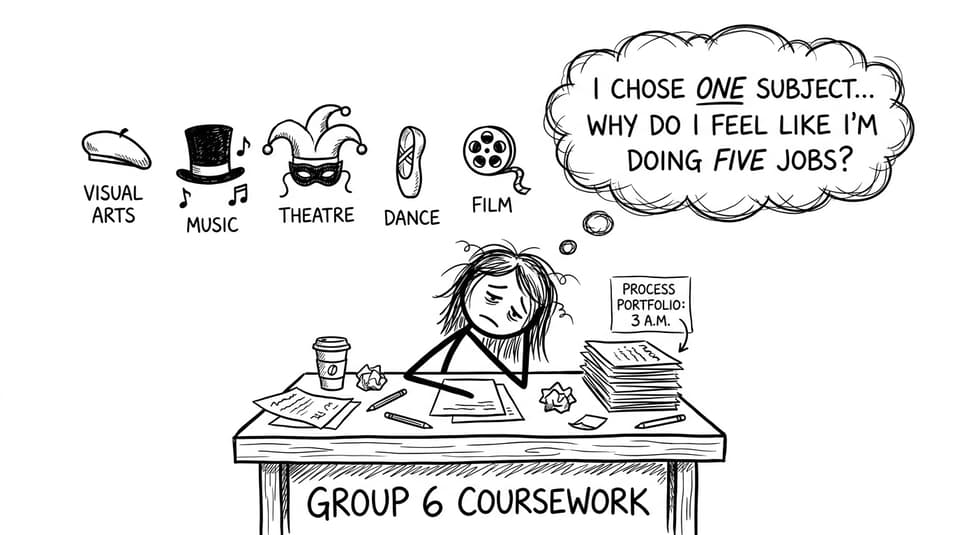
What coursework looks like in each IB Group 6 Arts subject
The medium changes. The pattern does not: create + contextualize + reflect.
Visual Arts coursework
Visual Arts is built around three assessed pillars:
-
Comparative Study (20%): compare at least three artworks from different contexts, using visual and written analysis plus personal reflection.
-
Process Portfolio (40%): show experimentation, development, and decision-making across your art-making process.
-
Exhibition (40%): present a curated set of resolved works with a curatorial rationale explaining intent and selection.
The hidden trick: the portfolio is not a scrapbook. It is evidence that you think like an artist, on purpose.
Music coursework
Music coursework blends making and explaining:
-
Creating (25%): original composing/arranging with recordings and reflection.
-
Solo Performing (25%): a performance that shows technical and expressive control.
-
Group Performing (25%): ensemble work, where collaboration matters.
-
Musical Links Investigation (25%): a written media script exploring significant links between music from different cultures.
In practice, strong music coursework is less about “being naturally talented” and more about documenting how you refined ideas.
Theatre coursework
Theatre is coursework-heavy because theatre is collaborative and iterative:
-
Director’s Notebook (35%): a documented directing vision, research, production notes, and reflection.
-
Research Presentation (30%): investigation of a theatre practice shared in an engaging presentation format.
-
Solo Theatre Piece (35%): create and perform a solo piece inspired by a tradition, practitioner, or theory.
If you are choosing between subjects, IB Film vs IB Theatre: Which Group 6 Subject Is Right for You? can help you spot the workload difference early.
Dance coursework
Dance balances making, performing, and investigating:
-
Composition and Analysis (40%): choreograph original work and analyze the choreographic process.
-
Performance (40%): solo and ensemble performances demonstrating technique and expression.
-
Dance Investigation (20%): research a style or tradition and present your findings.
Dance coursework rewards students who can name their choices (space, time, dynamics) and connect them to intent.
Film coursework
Film coursework typically includes both analysis and production:
-
Textual Analysis (20%): write about how films construct meaning using cinematic techniques.
-
Comparative Study (30%): compare films across cultures, genres, or contexts.
-
Film Portfolio (50%): original film projects with production evidence and reflective commentary.
Film is the ultimate “show your work” subject: scripts, storyboards, edits, and feedback cycles all matter.
Why IB Group 6 Arts coursework matters (especially if you are exam-focused)
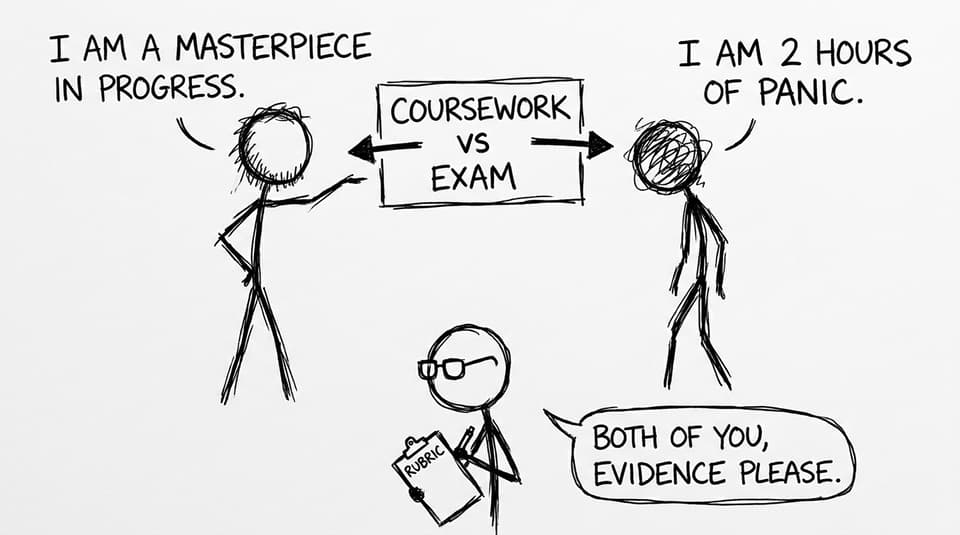
Even if your brain prefers timed conditions, IB Group 6 Arts coursework trains a different kind of exam skill: turning messy thinking into clear evidence.
It matters because:
-
It is holistic: your grade reflects process, not just a final moment.
-
It is realistic: artists revise constantly; so do top-scoring submissions.
-
It is transferable: research, reflection, and decision-making travel well into other subjects.
For a deeper look at how assessment works, read Understanding Assessment in IB Group 6 Subjects.
A practical strategy to score higher in IB Group 6 Arts coursework
The best students do not “wait for inspiration.” They build systems.
Build a weekly rhythm (not a heroic sprint)
Use a simple split:
-
2 sessions for creation (making, rehearsing, filming, composing)
-
1 session for documentation (photos, screenshots, annotations)
-
1 short session for reflection (what changed, why it changed, what you learned)
If you need realistic time targets, How Many Hours a Week Should You Study for IB Group 6? gives SL and HL benchmarks.
Use RevisionDojo like a feedback loop
Coursework improves fastest when feedback is frequent and specific. RevisionDojo is built for that:
-
Use the Coursework Library for models and standards: Coursework and IB Coursework Examples.
-
Run drafts through the Grading tools for rubric-aligned comments: IB Coursework Grader.
-
Use AI Chat to pressure-test your rationale, tighten your reflection, and translate vague intention into clear criteria language.
-
Pair Study Notes + Flashcards to keep key terminology ready when you write investigations or commentaries.
-
When you are balancing Group 6 with exam subjects, the Questionbank and Mock Exams help keep the rest of your timetable stable.
If you are unsure what gets submitted and how moderation works, Will My IB Group 6 Coursework Be Sent to the IB? clears up the process.
Closing: treat coursework like your creative proof
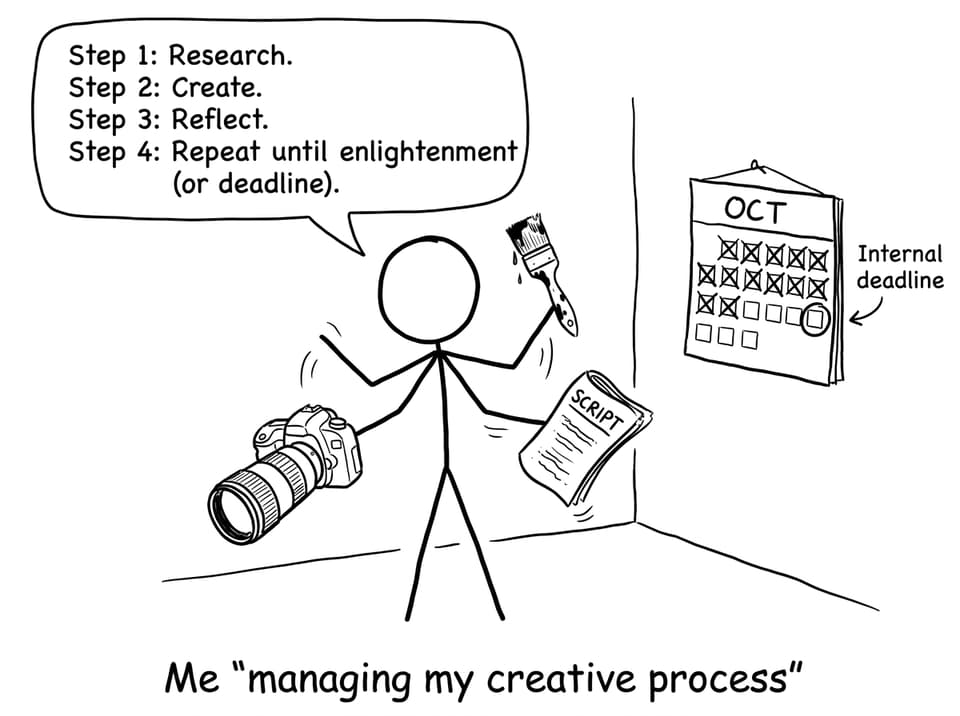
In IB Group 6 Arts, the student who wins is rarely the one with the most “talent.” It is the one who can show intention, process, and reflection with calm consistency.
If you want your coursework to feel less like a mystery and more like a plan, use RevisionDojo to build that plan: study with Study Notes and Flashcards, practice with Questionbank, refine with AI Chat, and polish with Grading tools and the Coursework Library. That is how IB Group 6 Arts coursework becomes manageable, and how it starts working for you, not against you.